
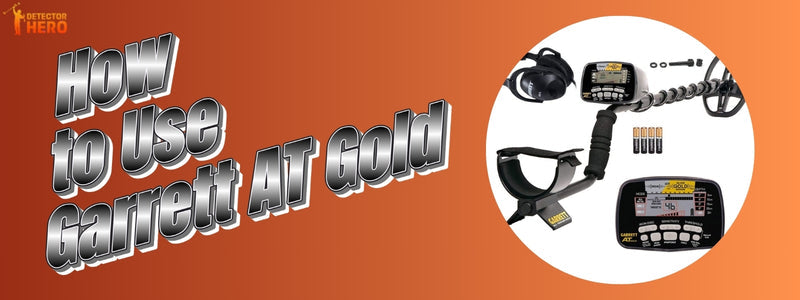
The Garrett AT Gold is intended for serious, not recreational, searchers. Learning how to use a detector correctly makes a big difference, whether you are upgrading from a simple detector or venturing into gold prospecting for the first time. Many users believe that simply turning it on and swinging is sufficient, however this machine rewards comprehension. You'll discover how each setting influences performance, how to modify it for actual ground conditions, and how to decipher the sounds it makes in this tutorial. This guide emphasizes practical use rather than too technical terminology. By the conclusion, you'll understand how to properly set it up, steer clear of typical blunders, and confidently look for gold on land and in the water without speculating.
What Is Garrett AT Gold?
A high-frequency metal detector designed especially for challenging ground and tiny gold detection is the Garrett AT Gold. It is designed to work with mineralized soil, which is where gold is typically found, in contrast to general-purpose detectors. Users are encouraged to pay close attention to voice responses because it does not rely on a visual target ID screen. Because of this, prospectors who value accuracy over convenience find it appealing. Additionally, the detector is completely waterproof, making it suitable for usage in damp areas like rivers and creeks. Sensitivity and control, not automation, are its strongest points. It is quite good at locating small particles of gold that many conventional detectors completely miss when used properly.
Garrett AT Gold Key Features Explained
Instead of focusing on coin shooting, the AT Gold has features that explicitly promote gold hunting. Its design prioritizes environmental adaptability, ground handling, and auditory clarity. It's critical to comprehend these elements as a system because they function together rather than separately. It prioritizes stability, sensitivity, and control over ostentatious screens or superfluous modes in mineralized ground. Instead of pushing the land to fit the machine, the detector's precise adjustments enable users to customize settings to their terrain. This method encourages practice and perseverance. You stop battling the detector and begin cooperating with it once you know why each feature is there.
Operating Frequency (18 kHz)
For the detection of tiny gold objects, the operating frequency of 18 kHz is perfect. Gold and other low-conductive metals, particularly small flakes and nuggets, react more strongly at higher frequencies. The detector can react swiftly to faint signals that lower-frequency devices frequently miss thanks to this frequency. Although it might make you more sensitive to ground minerals, this is controlled by appropriate ground balance. Improved detection depth on tiny gold without compromising clarity is the outcome. One of the primary causes of the AT Gold's exceptional performance in actual goldfields is this frequency selection.
All-Metal Mode vs Discrimination Mode
The AT Gold works best in All-Metal mode. It is perfect for professional gold prospecting since it provides maximum depth and sensitivity. Conversely, while scanning mixed areas, discrimination mode helps minimize undesired iron signals. Although discrimination has its uses, over-reliance on it might result in missed opportunities. Many seasoned users utilize Iron Audio to detect trash after starting in All-Metal mode. You may be flexible without abandoning important goals if you know when to flip between these modes.
Waterproof Design
Because the AT Gold is waterproof up to ten feet, it can be used with confidence on damp soil, shallow rivers, and streams. This makes gold-rich settings accessible that are inaccessible to dry-land detectors. Additionally, waterproofing shields internal parts from dust, mud, and rain, ensuring the detector's dependability under challenging circumstances. But in order to completely submerge the device, headphones also need to be waterproof. This design allows users greater freedom to seek where gold naturally settles and promotes exploration beyond conventional detection areas.
Iron Audio Feature
Instead of completely ignoring iron signals, Iron Audio lets you hear them. This is crucial since some gold targets have an iron-like sound. You learn more about the target by paying attention to the iron tone rather than getting rid of it. By doing this, missing gold that is concealed next to iron waste is prevented. In old prospecting sites where rusted metal and nails are prevalent, Iron Audio is particularly helpful. Instead of using filters, it teaches your ear to detect minute differences.
Unboxing and Setting Up the Garrett AT Gold
In order to save frustration later, set up the AT Gold right from the beginning. Although the parts are straightforward, balance and performance are impacted by correct assembly. Smooth operation in the field is ensured by taking your time during setup. The detector should feel balanced and comfortable in your hand once it is built. Fatigue and erroneous sweeps can result from an improperly set shaft. Turning on and verifying audio clarity after assembly helps find any problems before you begin detecting. This preparation boosts your confidence and frees you up to concentrate on learning the detector instead of troubleshooting issues outside.
What’s Included in the Box
The control unit, search coil, adjustable shaft, arm cuff, headphones, and user manual are usually included in the box. Depending on the seller, accessories might be included in some packages. Before assembling, check each component for damage. Comprehending the functions of each component enables you to appropriately assemble the detector and prevent needless modifications in the future. For storage or transportation, it is beneficial to keep the original packing.
Assembling the Detector
Although assembly is simple, it should be done carefully. Firmly join the shaft parts, fasten the coil, and wrap the cable neatly without overtightening it. While overtightening might harm a connection, a slack cable can result in incorrect signals. When your arm is relaxed, adjust the shaft length so that the coil is level on the ground. During extended detecting sessions, proper assembly enhances control and balance.
Battery Installation and Power-On Check
Before using them for the first time, install new batteries. Poor performance and erratic signals can be caused by weak batteries. After turning on, make sure the buttons react appropriately and listen for clear audio. This brief check ensures everything works properly before you head into the field. When detecting in isolated locations, always keep extra batteries on hand.
Basic Controls and Button Functions
The controls on the AT Gold are straightforward but effective. The detector's behavior in the ground is directly influenced by each button. While threshold modifies background audio, sensitivity determines how strongly the detector reacts. Stability depends on ground balance, particularly in mineralized soil. You can switch between All-Metal and Discrimination via mode selection. Understanding the functions of each control avoids confusion and needless modifications. Knowing the controls enables you to make deliberate adjustments based on situations rather than continuously changing settings. Beginners and seasoned users can be distinguished by their proficiency with these buttons.
How to Ground Balance the Garrett AT Gold
Ground balance is one of the most crucial tasks when utilizing the AT Gold. It enables the detector to concentrate on metal targets while ignoring mineralized dirt. The detector may generate erroneous signals or completely miss gold if it is not properly ground balanced. It is insufficient to balance once because ground conditions are constantly changing. You can gain control in a variety of settings by learning both automatic and manual techniques. The detector operates more smoothly, deeply, and precisely when the ground balance is accurate.
Automatic Ground Balancing
For the most part, automatic ground balancing is rapid and efficient. The majority of ground interference is eliminated by pulsing the coil and allowing the detector to self-adjust. This technique works well in constant soil and is perfect for novices. Every time the ground shifts or the detector becomes unsteady, rebalance.
Manual Ground Balance
When automated balance is insufficient, manual ground balance enables precise changes. This works well on uneven or heavily mineralized terrain. You can increase the detector's sensitivity to little gold and further silence it by using manual adjustments. It offers more control but takes practice.
Common Ground Balance Mistakes to Avoid
Common errors include hurrying, balancing over metal targets, and neglecting shifting soil conditions. These mistakes lead to dissatisfaction and worse performance. Long-term results are improved and time is saved by taking a few more seconds to properly ground balance.
Best Settings for Garrett AT Gold
There isn't a single ideal configuration for every circumstance. The ideal parameters vary depending on the environment, intended size, and kind of ground. Learn how settings interact instead simply copying numbers. Sensitivity ought to be as great as feasible without causing instability. The threshold need to be audible without being overpowering. The detector operates more smoothly and precisely when these settings are properly balanced.

Settings for Gold Prospecting
Use the All-Metal mode with a steady threshold and moderate sensitivity. Prioritize smooth operation above maximal power. With minimal noise, this configuration enhances the detection of tiny gold.
Settings for Coins and Relics
Iron Audio's discrimination mode aids in locating undesirable targets. Reduced sensitivity preserves accuracy while increasing stability in trashy regions.
Settings for Highly Mineralized Soil
Ground balance often and reduce sensitivity a little. In challenging terrain, stability is more crucial than depth.
How to Detect Gold with Garrett AT Gold
It takes time and accuracy to find gold. Keep the coil near the ground as you gently sweep it. Instead than listening for loud tones, look for weak, consistent signals. Subtle auditory reactions are frequently produced by little gold. Complete ground coverage is ensured by overlapping sweeps. Accurate pinpointing avoids needless excavation. Your ear will be able to distinguish gold-like signals even in noisy environments with practice.
Understanding Audio Tones and Target Signals
Sound is a major component of the AT Gold. It is crucial to learn how to read tones. Trash signals can sound broken or harsh, but gold signals are typically smooth and mellow. More important than volume is audio constancy. Without using devices, you may make better dig judgments by paying close attention.
High vs Low Tone Signals
Low tones typically suggest iron, whilst high tones typically indicate non-ferrous objects. However, depending on size and shape, gold can yield both.
Identifying False Signals
Mineral sounds and hot rocks can imitate targets. Re-sweeping from several perspectives aids in verifying authentic signals.
Reading Target Behavior Without a Screen
The movement of the coil affects the audio. Random sounds typically imply ground interference, whereas consistent answers reveal metal.
Using Garrett AT Gold in Different Environments
When the settings are appropriate for the surroundings, the AT Gold functions effectively in a variety of situations. Efficiency is increased by knowing how terrain impacts signals. Rather than making significant modifications, each environment needs minor alterations.
Dry Land and Goldfields
Pay attention to gradual sweeps and ground balance. Heavy mineralization is common in dry soil.
Rivers, Streams, and Shallow Water
Water slows down movement, so use caution when sweeping. Gold frequently sinks in low places and cracks.
Rocky and Mineralized Terrain
The key is stability. Diminish sensitivity and concentrate on messages that can be repeated.
Common Beginner Mistakes
Instead of focusing on clarity, new users frequently want depth. Missed targets and instability result from over-adjusting parameters. Poor outcomes result from ignoring weak signals or neglecting ground balance. Success is increased by learning gradually and having faith in the detector.
Maintenance and Care Tips
After every usage, especially after coming into contact with water, clean the detector. Regularly check the coil cable. When not in use, take out the batteries and store it somewhere dry. Long-term dependability is ensured by proper maintenance.
Garrett AT Gold vs Other Gold Detectors
|
Feature |
AT Gold |
Standard Detectors |
|
Frequency |
High (18 kHz) |
Lower |
|
Waterproof |
Yes |
Often No |
|
Gold Sensitivity |
High |
Moderate |
|
Target ID Screen |
No |
Yes |
The AT Gold is perfect for serious prospecting since it puts performance ahead of convenience.
FAQ’s
1. How deep can the Garrett AT Gold detect gold?
Gold size, soil mineralization, and settings all affect detection depth. While larger pieces can be found deeper, smaller gold nuggets are typically found within a few inches. Accuracy and depth are greatly increased by gradual coil sweeps and proper ground balancing.
2. Is the Garrett AT Gold good for heavily mineralized ground?
Yes, when the earth is properly balanced, it does well in mineralized soil. Users can lower ground noise and maintain steady operation under challenging circumstances with its All-Metal mode and manual ground balance.
3. Can beginners learn the Garrett AT Gold easily?
It takes time, but even beginners can utilize it successfully. Users need to practice listening to tones because it primarily relies on audio rather than visual target ID. Better outcomes are the prize for those who are open to learning.
4. Does the Garrett AT Gold work well in trashy areas?
By turning on Iron Audio and going to Discrimination mode, it can be utilized in trashy regions. However, it works better in areas with less litter than in goldfields that are cleaner.
5. What coil size works best for gold hunting with the AT Gold?
For little gold and confined locations, the conventional coil works great. While larger coils aid in covering more ground when investigating open areas, smaller coils enhance separation in difficult terrain.
Conclusion
Using the Garrett AT Gold properly is about understanding, not shortcuts. This detector rewards patience, attentive listening, and meticulous setup. Results automatically increase when you start reading the ground instead of depending on presets. With practice, the AT Gold becomes into an extension of your senses, pointing you in the direction of actual gold rather than noise. Understanding its controls will increase the effectiveness of every hunt, whether you're looking in shallow water or dry land.
Share:
How to Use Garrett Ace Apex?
How to Use Garrett Vortex VX9?